Susannah Ireland travels to West Delhi to photograph a fascinating and threatened community
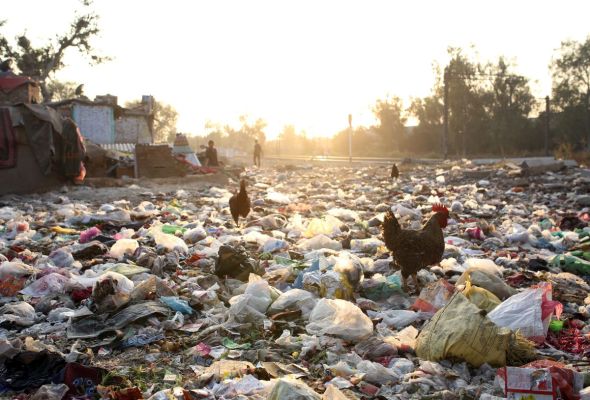
General view of the Kathputli slum colony of New Delhi, India, December 10th, 2014. All images by Susannah Ireland
Recently I embarked upon a photo essay documenting the lives and activities of residents in the Kathputli (or Puppeteers’) Colony, a community of artists in an area of West Delhi in India.
Popularised by Salman Rushdie’s novel Midnight’s Children, the slum has been famed for over 60 years for its dense population of puppeteers, acrobats, snake-charmers, musicians, dancers, actors and street performers – making it the world’s largest community of street performers.
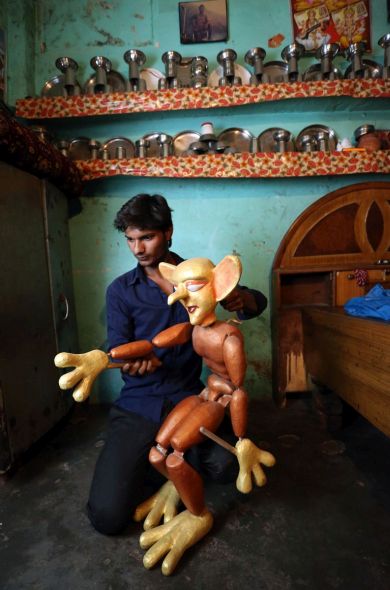
Puppeteer Sarju Bhaat practises using his puppets at his home in the Kathputli slum colony of New Delhi, India, December 7th, 2014.
Their community and subsequent livelihood is under threat from demolition by the Delhi Development Authority, who want to clear the slums the people live in to make way for luxury flats and shops. The artists would be relocated into a nearby transit camp in a high-rise apartment block, making it impossible, so they claim, to practice their art.
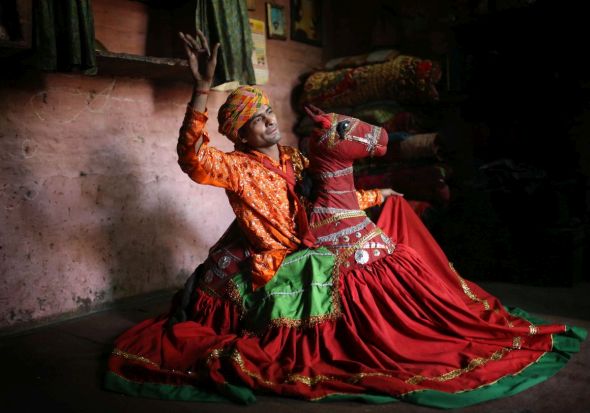
Jagdeesh Makkhan is pictured performing the Kachhi Ghodi traditional Rajasthani folk dance at his home in the Kathputli slum colony of New Delhi, India, December 7th, 2014.
As a foreigner and lone female with only limited grasp of Hindi, it would be inadvisable for me to simply walk into a slum and expect co-operation. I therefore sought the help of a local charity, which was already working with residents of the slum to assist my project.
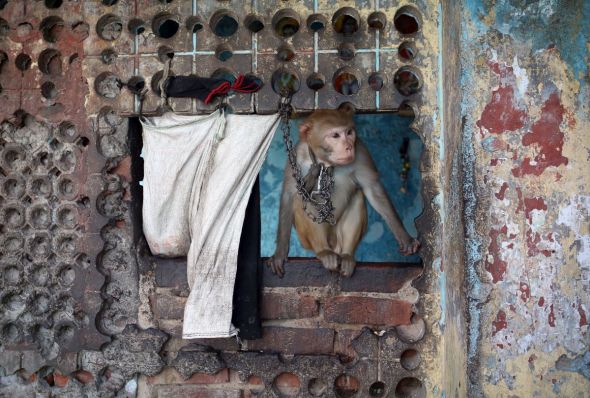
A monkey is pictured chained up outside a urinal in the Kathputli slum colony of New Delhi, India, December 7th, 2014.
I was acutely aware of the patronising nature of ‘slum tourism’ and did not want to fall into any negative stereotypes of ‘poverty porn’ in my portrayal of the residents and their campaign, whilst also being careful not to glamourise or romanticise the obvious lack of basic facilities and challenging living conditions.
Consequently, I had quite a few meetings with the charity volunteers and community residents to establish my intentions as a photojournalist, understanding their grievances and building trust in the community before even shooting a single frame.
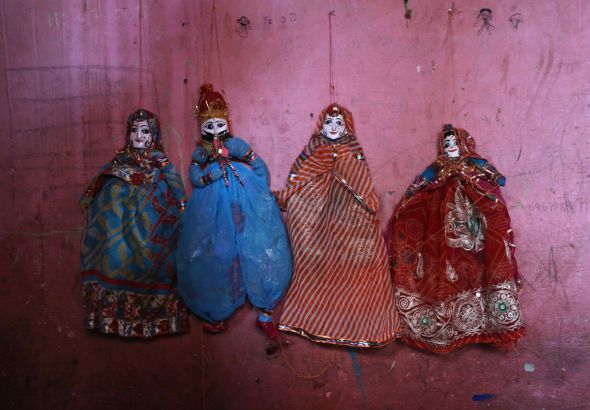
Rajasthani puppets are pictured in the home of a puppet maker Ghita Devi in the Kathputli slum colony of New Delhi, India, December 8th, 2014.
I spent several days with the charity outreach workers travelling around the slum, visiting families and artists and setting up my equipment in the quite limited space. I was lucky enough to have a translator with me who helped enormously with setups and explanations.
All the residents I met were brilliant – an inspiration of artistry and resilience despite such challenging conditions. They were all against the planned demolition of the site and were extremely helpful in any efforts to raise awareness and help fight against it.
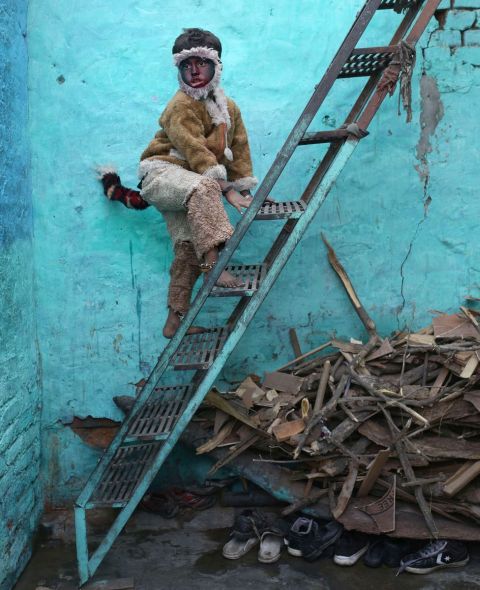
Seven-year-old Mohip Beda performs dressed in a monkey costume at the Kathputli slum colony of New Delhi, India, December 7th, 2014.
I became aware about half way through the project that the charity I was working with wasn’t quite as legitimate as I’d originally thought. The apparently philanthropic owner seemed to be asleep whenever I turned up, even in the middle of the day, or else drunk and not contactable.
I began to suspect it was just an establishment designed to exploit and profit from the infamous nature of the slum, a conductor of slum tours for foreigners – the exact thing I was intent on avoiding. The volunteers who actually worked, and sometimes lived, in the colony were brilliant though, but hinted that much of the money made by the charity never actually reached the residents it claimed to help.
I decided to continue working with the volunteers, and distance myself from the owner if at all possible.
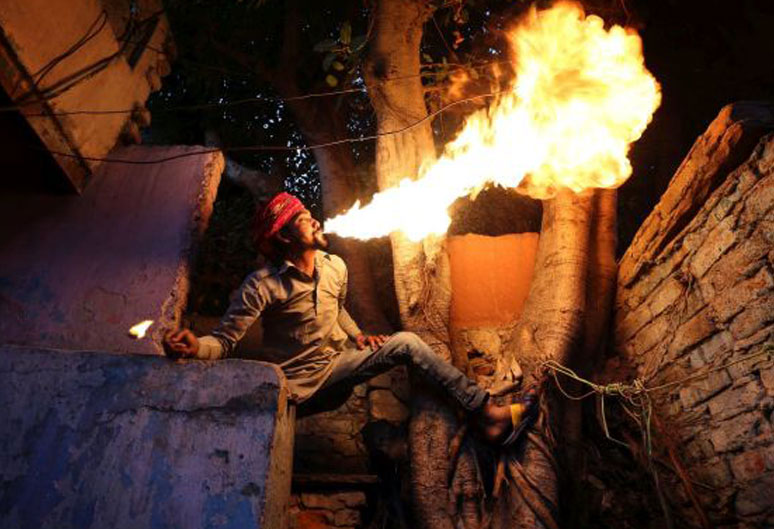
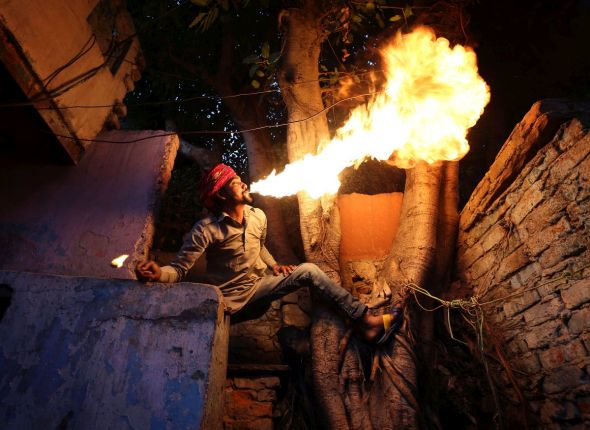
Fire breather Amit Kumar Bhatt practising his craft at his home in the Kathputli slum colony of New Delhi, India, December 10th, 2014.
Shooting the firebreathing artist (above) was very dramatic, although it made me slightly nervous, as health and safety didn’t appear to exist and there were a lot of children running around the already cramped location.
I also had to be careful to avoid getting bitten by rats whilst trying to get particular angles on the images I needed, which once involved wading through sewage.
It was fascinating observing all the micro-industries and industrious enterprises operating in the colony though, and how much creativity can thrive in such a small space.
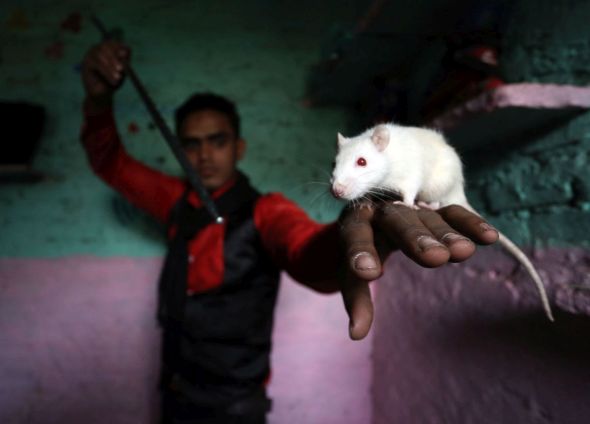
Magician Sohil Kahn practises his magic with a white rat at his home in the Kathputli slum colony of New Delhi, India, December 7th, 2014.
The Kathputli colony campaign is still ongoing, and the residents are still campaigning against the clearance of their home, despite some residents having already been moved on. My story was published in The Independent on Sunday Magazine and the colony’s campaign has reached the attention of the international media, something I hope my photo essay contributed to, although how much influence that will have on subsequent government policy is yet to seen.
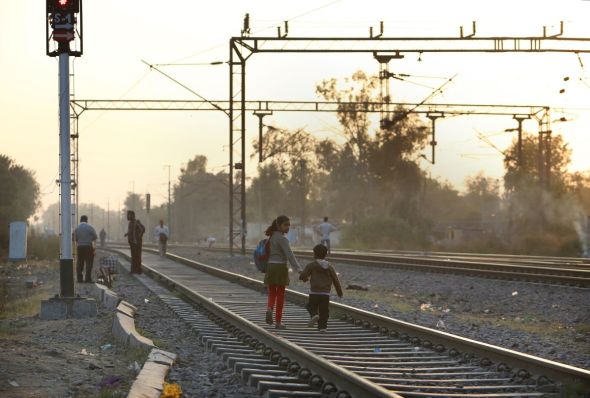
Children walk home on the railway track which runs alongside the Kathputli slum colony of New Delhi, India, December 10th, 2014.
Susannah Ireland is an editorial and documentary photographer. She can be reached at susannahireland.com. Susannah was talking to Jon Stapley
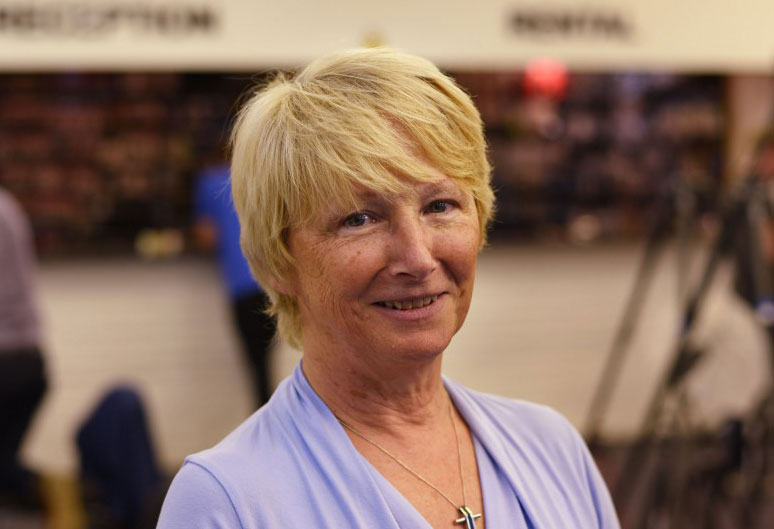
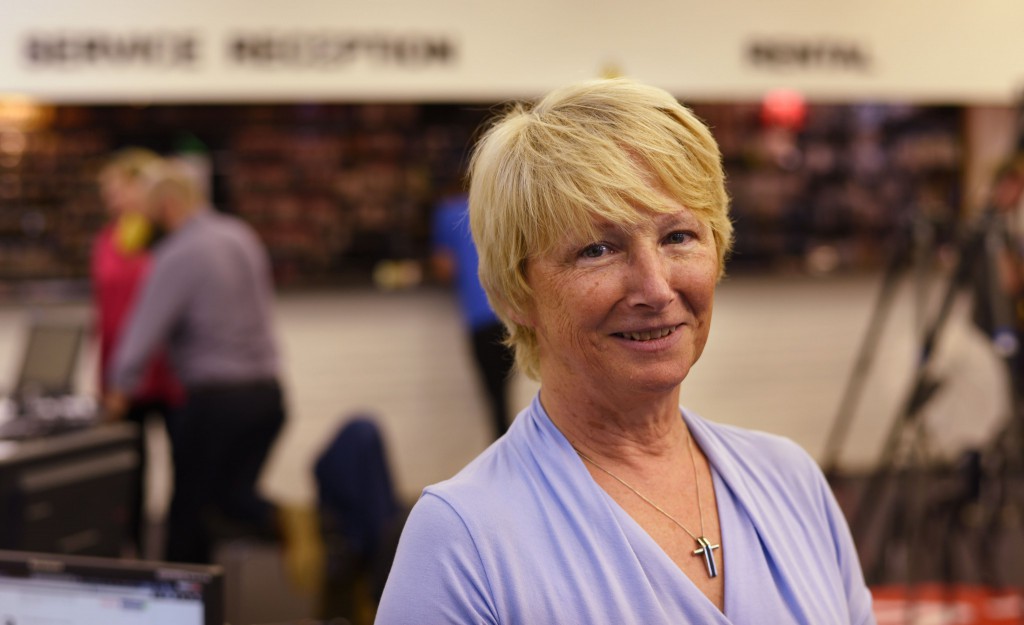
Paula Stevens co-owned the business with Mike Allen for 28 years and was the driving force behind Fixation. She was a well known presence and highly respected in the photographic market, known by dealers and picture editors from the daily and regional newspapers. It was through her commitment that Fixation made connections and established relationships with big names such as Getty, Press Association, Reuters, Johnsons Press, Mirror Group and associated Newspapers. We sit down with her and discuss the beginning of Fixation, the ups and downs of her working life and what the future holds.
F: Hi Paula, thanks for taking the time to chat to us about your extended career and development of Fixation. Does it feel like you have achieved alot?
PS: It doesn’t really seem possible that I’m drawing towards the end of my working life, and celebrating helping Mike develop the company from being just him and Mick into the industry standard employing over 40 people that it is today. Over the last 15 years or so, as Mike became less involved in actually repairing equipment, I’ve become the day to day overall Manager, responsible for marketing and the website, personnel, the buildings, H&S, statutory duties and policy development, finance, backing up the sales team and keeping up to speed with photographic technological developments.
F: Have you always been interested in photography and cameras?
PS: We weren’t a very active family with a camera growing up. I remember us having a Kodak Instamatic. Dad would put a film in for the holidays one year, and then we’d finish that film over Christmas or the following year’s holidays! All the family photos are still in an old shoebox at my mum’s house. My first camera of my own was a Nikon FE2 with a 50mm lens which Mike gave me not long after we met, but I have to say it was some years before I really got enthused about taking pictures.
F: Was Fixation your first job?
PS: Fixation was my third career. I was brought up in Croydon and after deciding not to go to university I enrolled at Croydon Tech for a “private secretarial course” to please my mum as she said it would always allow me to get a job. I was a shy, timid secretary in my first job, a fast but hopelessly inaccurate typist in the days of manual typewriters, multiple carbon copies and typist’s erasers. (The erasers would later be an import tool at Fixation for cleaning battery contacts deep inside cameras, flashes and motor drives)
I wasn’t going to make it big in the secretarial world so I joined the management training scheme at Liberty department store in Regent Street. There I did excel and became the youngest ever buyer appointed! I bought Ladies Separates, Beachwear and Children’s wear, and am proud to have commissioned that almost transparent skirt in which Lady Di was famously photographed as she got to know Prince Charles. It was actually an elasticated-top sundress, but Diana was so tall she wore it as a skirt! Years later, this photo was included in our Arthur Edwards online gallery.
Mike and I met roller skating at the ‘Cornet of Horse Roller-Boogie Palace’ in Battersea one Friday night in 1980! That night changed the course of my life, and we were very quickly an item. About a year later Mike left Nikon where he was service manager and went to set up a camera workshop at KJP in Great Marlboro Street a few doors down from Liberty’s. After a few years there, where he met and trained Mick Edwards as a techician, he left to set up his own business in Vauxhall in the Bondway Business Centre.
F: Where did the name ‘Fixation’ come from?:
PS: I still recall the evening in early 1988 when the three of us sat over dinner in Stockwell, throwing around ideas for a name for the company. I got out the dictionary and looked up ‘Fix’ as we always used to call Mike ‘Mr Fix-it’. In the list of related words was “Fixation”, and we all agreed this was a great play on words, combining Fixing the cameras with an obsession to get it right.
At the time, I was becoming disillusioned with general retail work, as Sunday trading loomed, and was happy to have the diversion of going down to Vauxhall after a full-on day, and doing the invoicing, accounts and PAYE, as well as fixing late night sandwiches so the guys could work on and keep up with the fast-burgeoning work. Once I left Liberty I brushed up my typing and shorthand and got a morning secretarial job in Pall Mall, after which I would nip up to KJP and pick up their repairs, hop on the tube back to Vauxhall, and spend the afternoons booking in, dealing with customers, invoicing, learning to give the cameras their final clean so the guys could get on with the next repair, and becoming the general dogsbody!
F: Can you describe what Fixation was like in the beginning?
PS: In those early days, we had two rooms on the fifth floor in the corner of a rather unpreposessing Victorian warehouse building with a famously terrifying lift, totalling about 440 sq ft. But we had good daylight for the technicians and a little parking. I used to drive to Nikon twice a week to deliver subcontracted work and pick up spare parts, as well as bacon and cheese croissants for all the staff from Manuel’s bakery in Lower Richmond Road! I also drove our little Peuguot 206 van round to all the national newspapers to pick up and deliver repairs, as well as going the extra mile when necessary to help a photographer get his kit back in time for an important trip or assignment.
F: When was the first break through for the company?
PS: As business grew, we were able to take further units along the corridors and knock through to increase the space. I think it was in 1990 or ’92 that Mike and I went to Photokina in Cologne and saw the first Kodak digital SLR adapted from a Nikon F801. Whilst we were there, we had a meeting with Harry Collins, MD of Nikon UK and Mike’s old boss, who offered us “A” dealership terms so we could compete and develop the equipment sales side of the business, which helped to shape our future business model. Not long after that, Canon UK started to woo us to take on their pro kit repairs because pro customers were telling them that they wouldn’t swap to Canon from Nikon because they liked bringing their repairs to Fixation, and a few years later we were able to finally say yes to that.
F: What was the key to the growth of the Fixation?
PS: The expansion of the company has been driven by customer satisfaction and personal recommendation. We’ve always kept a low profile and not gone out of our way to attract non-pro clients (though of course we’ve not turned anyone away!) That has meant that the growth has been organic and customer-driven – providing what they really want and need. We have an extremely varied database including some very prestigious and high-profile clients and brands which I’m too modest to mention (and some we are not even allowed to!) Once we had done the 2012 Olympics and the Commonwealth Games pop-up shops in the press centres, we realised that Fixation had quietly become a ‘brand’ in its own right, and moved to consolidate that with some careful sponsorships specifically aimed at professional photographers.
F: How much have you had to learn during the development of the company over the last 28 years?
PS: It’s always been hard work; busy, busy days and long hours working into the evenings at home catching up with administration and “exciting” essentials like VAT and accounting, drafting policies, and employment documentation for our growing team…all the things that required peace and quiet and more concentration than was possible during the daytime hubbub at Fixation. I’ve been fortunate to be able to turn my hand to most tasks, and have taught myself many new skills as I’ve gone along. I’ve never been great at dealing with change though, and Mike had to push me kicking and screaming to learn about digital technologies in photography. In the end it was important in enabling me to help and coach a huge number of our customers to make the often terrifying leap in equipment change from film to digital.
F: Where there any perks or highlights to the job?
PS: When I met my new partner Andrew, we both became involved in taking pictures for Dorna, the organisers of MotoGP, doing publicity and marketing shots for the VIP Village service. This was fantastic for me! It got me out of the office 5 or six times a year when I probably wouldn’t otherwise have taken holidays, and I saw life from the other side of the camera. It certainly helped me appreciate the pressures under which our customers so often work, but usually involved me carrying a few repairs back to London in my back-pack for other snappers in the press rooms.
F: What do you think the future will be for Fixation?
PS: Mike and I remain extremely proud that the end of our relationship 16 years ago passed virtually unnoticed by our team and customers, and never jeopardised the stability of the company. We remain the closest of friends. We looked long and hard for the right team to take over our dream and vision, and carry it to the next level. We believe we found that in Michele Channer and Andrew Morrissey, backed by the Wex team. They have a wonderful company ethos of service and high standards, as well as all kinds of skills where we didn’t have the courage to venture. We are convinced that they will carry Fixation onward and upwards whilst staying true to our customers and what they really value in Fixation. It’s been an eye-opener over the last year to watch how they’ve already brought a sea change to our systems, website, stock mix and stock control, and to see the vision develop.
F: What was your proudest moment?
PS: Undoubtedly it was opening the Prophoto Centre in the Main Press Centre at London 2012 Olympics. Not only was it an honour to be asked by Bob Martin, the Photo Manager at this and so many other Olympics to do this, but for an organisation of Fixation’s size and limited resources to reproduce a mini version of itself in a pop up venue on the other side of London…Wow! You can have no idea of the hoops we had to jump through to comply with the IOC’s anti-commercial laws for on-site merchandise, let alone the security, bureaucracy and H&S regulations that were set by LOCOG! It truly was the Health and Safety Games, and caused me many sleepless nights and not a few tears of frustration!
Apart from that specific, I’m most proud of what our staff have achieved together. They’ve all grown too, and have a huge skill-set between them. Without them we’d have been nothing, and I’m eternally grateful for their support, enthusiasm, patience (when even I couldn’t make a decision!) and hard work, very often over and above the call of duty, which is a tribute to their loyalty to Mike and I. My fondest memory is tearfully telling them all how great they were and how well they had all done to support me at the company meeting at the end of our “Olympic Year”. It meant a lot to me to see a few others dabbing at their eyes as well! We’ve had some pretty awesome Christmas parties too!
F: Do you have a least favourite?
PS: Filling in when the cleaner was sick or on holidays. That’s my least favourite bit!
F: What will you miss most?
PS: Interacting with the customers without doubt. There’s rarely a day goes by when I don’t go down the showroom and find someone there I know well enough to give a hug to!
I’ve know so many of the clients since they were new to professional photography, know what kit they use, who they work for, where they live, etc. Many have become friends as well as customers. Knowing them and feeling their appreciation of what we’ve provided at Fixation has been the most rewarding part of my work, and made this the most life-affirming period in my career.
F: After such a fast-paced and lively career life, what are you planning on doing in your retirement?
PS: After Paula’s Retirement Party Week this week, I’ll be celebrating my 64th birthday a week later, taking a short holiday, and then concentrating on my bucket list. I’ve already bought my watercolours, booked in for Spanish classes, volunteered as a director on the residents’ committee at my new home in Taplow, got the fitness kit and gym membership, and some new cookery books! I sincerely hope to be one of those who says ‘I don’t know how I ever found time to work’!
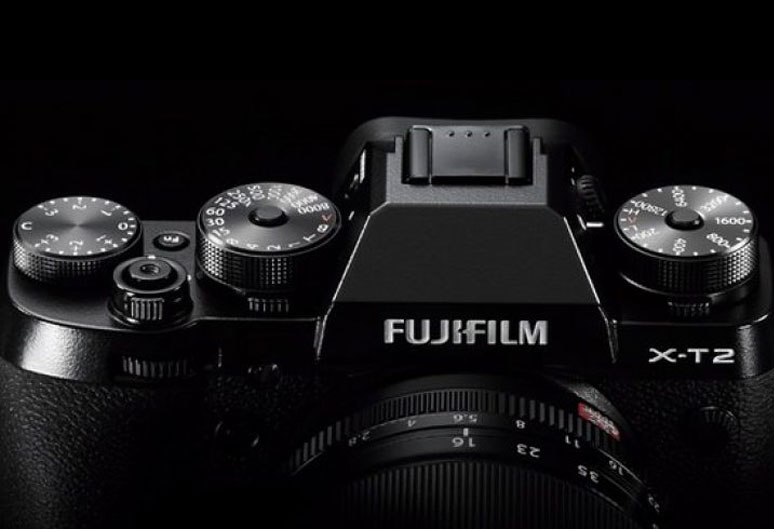
Fujifilm’s X-T2 arrived with an overhauled AF system and a strong focus on moving subjects. We take a closer look.
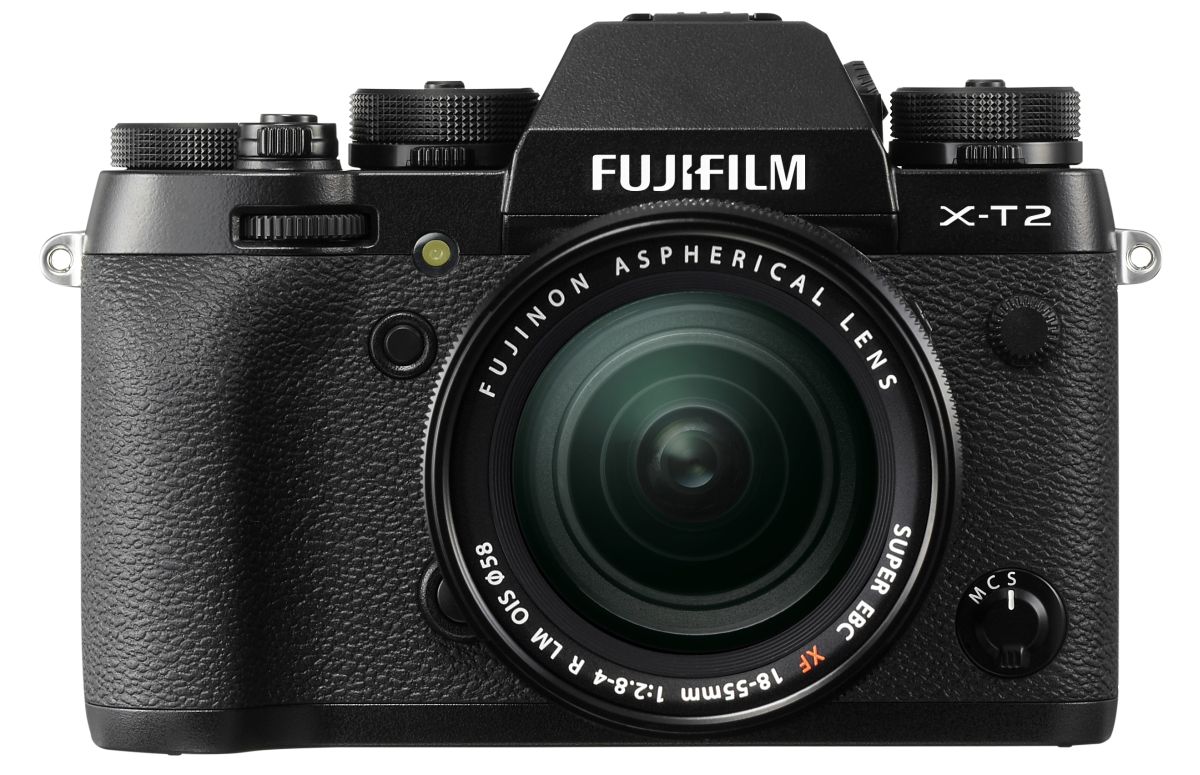
Although Fujifilm’s X-T2 may look similar on the surface to the previous X-T1, there are number of refinements to what’s going on inside.
The autofocus system is one area that’s received considerable attention. Some of the changes made are a direct result of the upgraded X-Processor Pro engine, and those who would like to use the X-T2 for sports and general action-based photography should be particularly interested.
The Basics
Like the X-T1, the X-T2 features an Intelligent Hybrid AF system that offers both phase-detect and contrast-detect autofocus.
When the X-T1 was released it offered 49 AF points in a 7×7-point formation. The v.4.0 firmware added Zone AF or Wide/Tracking AF modes and boosted the array to 77 points when using those modes.
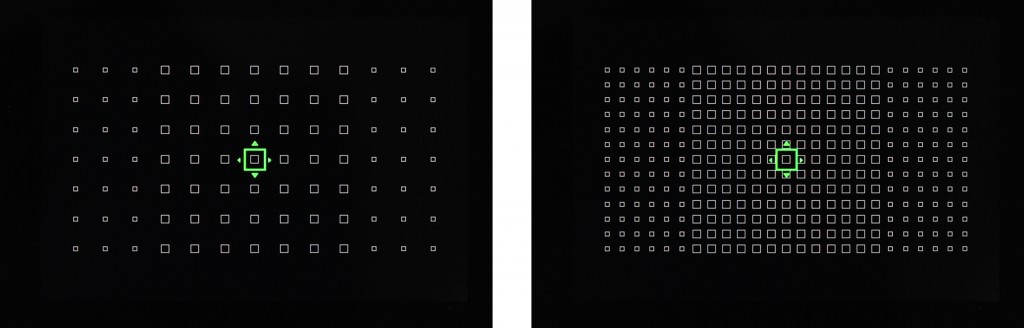
By comparison, the X-T2’s AF system offers 91 points in a 7×13-point formation at default, and this can be expanded to 325 points in a 13×25-point formation.
When set to the default 91-point mode there are 49 phase-detect AF points in the centre of the array. This is a significant improvement from the nine phase-detect AF points that featured in the X-T1.
The X-T2’s default 91-point AF system* compared with the expanded 325-point AF setting*
When using the expanded 325-point setting, however, 169 central points are phase-detect AF points in the centre of the frame. Both patterns occupy roughly the same proportion of the screen as each other, although the 325-point system is much denser, which makes it better suited for tracking moving subjects.
This central area with the phase-detect points covers 40% of the frame, and with the contrast detect points the total coverage is 85%. You can easily see the extent of both types as the phase-detect AF points are larger than the contrast-detect AF ones.
Fujifilm claims the phase-detect AF system comes into play more readily on the X-T2 than before, while the contrast-detect AF system is said to work down to -3EV.
* These images include the black surround of the LCD screen. As such, they do not accurately show the extent to which they cover the frame.
Focus options
Both the Single (AF-S) and Continuous (AF-C) options can be used with each of the Single Point, Zone and Wide/Tracking AF modes, which gives a total of six combinations to suit different subjects and scenes.
The Single Point is the default option, with one point that can be positioned anywhere on the array. The Zone option allows you to specify a particular area of the focusing system to use, while the Wide/Tracking option is programmed to automatically focus on subjects in the scene with the highest contrast, or alternatively to track moving subjects across the frame when used in the continuous focus setting.
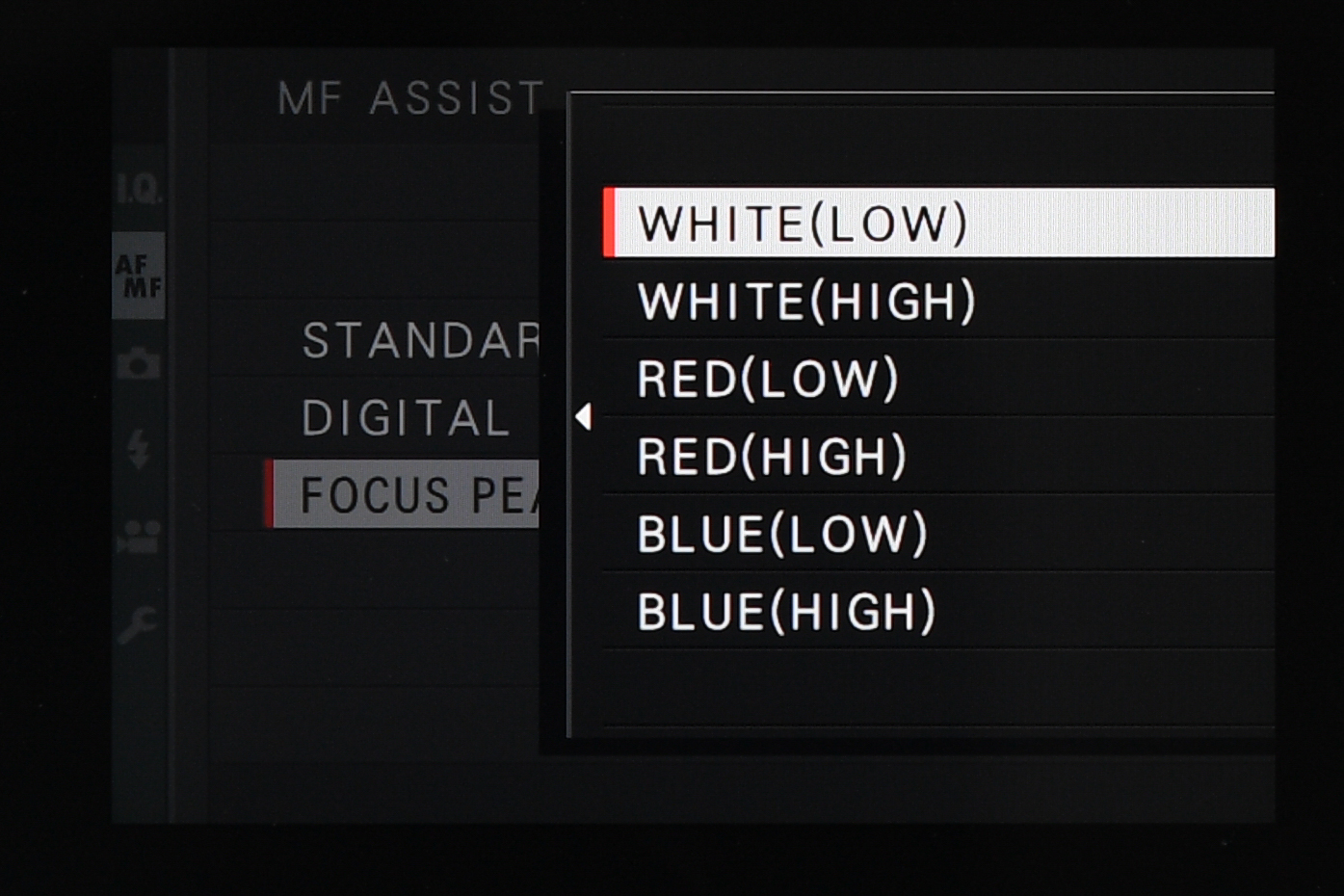
Additionally, the camera can be set to manual focus, with the same focus assist aids as before. These are Digital Split Image, in either colour or monochrome settings, as well as focus peaking, which can have its colour adjusted over white, blue and red highlights and its peaking level set to either high or low options.
The camera offers comprehensive control over focus peaking
Speed and precision
The new processor is said to have improved overall response times, and the AF system has benefited from this. Whereas Fujifilm claimed AF times as short as 0.08sec with the X-T1, the X-T2 shaves off 0.02sec from this to just 0.06sec. This is possible when the camera is set to its Boost option in its Power Management settings, although activating this comes at the slight expense of battery life; whereas Fujifilm claims a battery life of around 340 frames on the Normal setting when using the LCD screen, this is reduced to approximately 260 in the Boost mode.
Fujifilm also claims that the updated processor and improvements to the focusing algorithm mean that the camera refocuses more quickly than previous models, and also that the contrast-detect AF system benefits from data being read twice as quickly than before.
The camera is also said to focus more easily against low-contrast subjects and those with very fine details than was previously the case. Something else that helps here is the ability to change the size of the AF point over five levels. You simply press the Focus Lever on the back and rotate the rear command dial to alternate between the different sizes. Furthermore, when shooting with the Zone setting, you can use the same controls to change the area of the Zone over three levels.
Physical controls
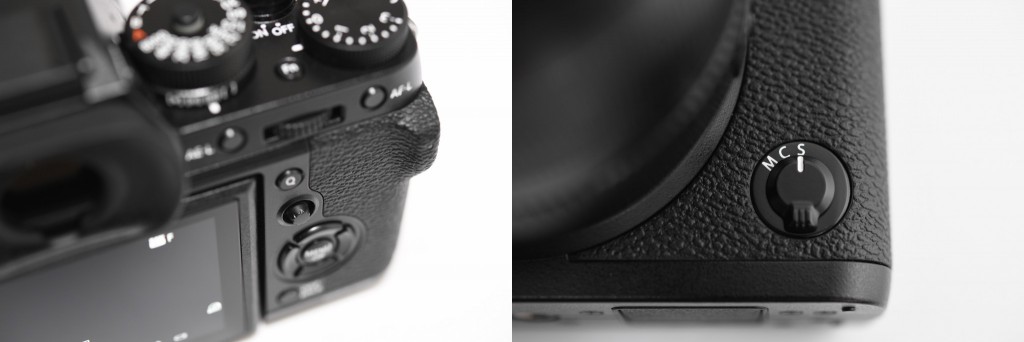
The body maintains the same Focus Mode Lever from the X-T1, with Single, Continuous and Manual Focus options, and this is found on the front plate. On the back of the camera, however, Fujifilm has added a new Focus Lever (something first seen on the X-Pro 2), just beneath the Q button.
The new Focus Lever control (left). As on previous models, the focusing mode is still chosen with the switch on the front plate (right).
The primary purpose of this new control is to allow for the focus point to be shifted more easily than before. It moves up, down, left, right and diagonally, and pressing it into the camera allows you to quickly return the focusing point to the centre of the array.
It also serves another purpose; when manually focusing the lens, you can shift this to the point where you want the camera to magnify into the scene beforehand. Once this happens, you can also use the rear command dial to magnify further into the scene for extra precision.
Continuous Focus
Although the X-T1 did a very good job to track moving subjects, continuous focus has not traditionally been a main selling point for the X-series. Nevertheless, the X-T2 follows the similarly specified X-Pro2 in attempting to change that.
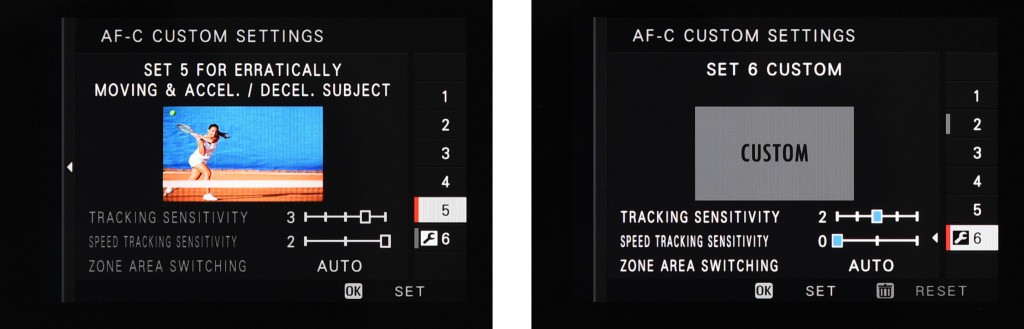
You can select one of five scenarios to help the continuous focus system (left) or program your own with settings to suit your subject (right).
Fujifilm has complemented the changes to the AF system with improvements to the continuous focus algorithm. The user now has the option to customise the system to suit five different scenarios. These are:
Multi Purpose
Ignore Obstacles & Continue To Track Subject
For Accelerating/Decelerating Subject
For Suddenly Appearing Subject
For Erratically Moving & Accelerating/Decelerating Subject
Each option is designed with a different combination of Tracking Sensitivity, Speed Tracking Sensitivity and Zone Area Switching, although if you feel that none suit the subject, you can also design your own AF-C algorithm and store it as the sixth option.
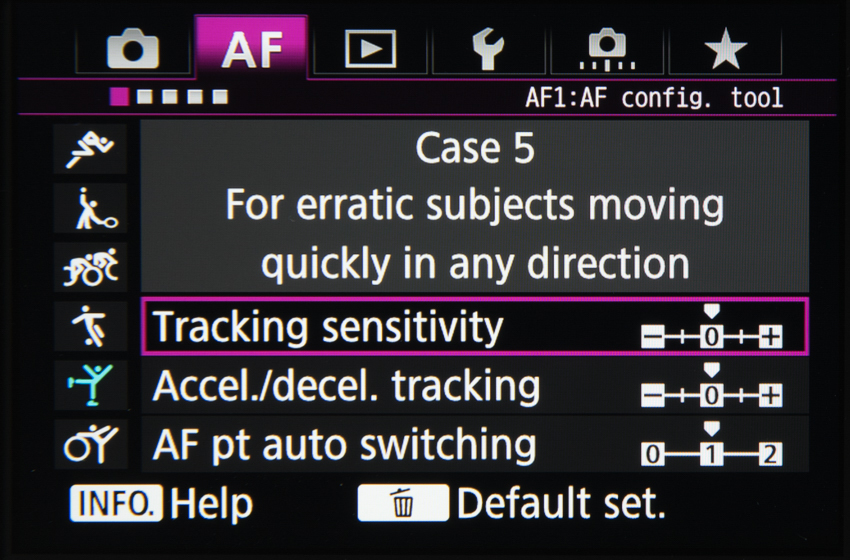
Look familiar? This echoes the AF Configuration tools that have been included on Canon’s higher-end EOS models for some time.
The similar option inside the Canon EOS-1D X Mark II
Other features
Eye Detection AF wasn’t initially included in the X-T1, although this came along in the v.4.30 firmware update announced in February. Not surprisingly this feature has been included here as standard, although it is said to have been improved to provide more accurate results. You can choose to focus on either the left or right eyes, or leave it to an auto setting. Alternatively, you can use face detection without enabling Eye Detection AF.
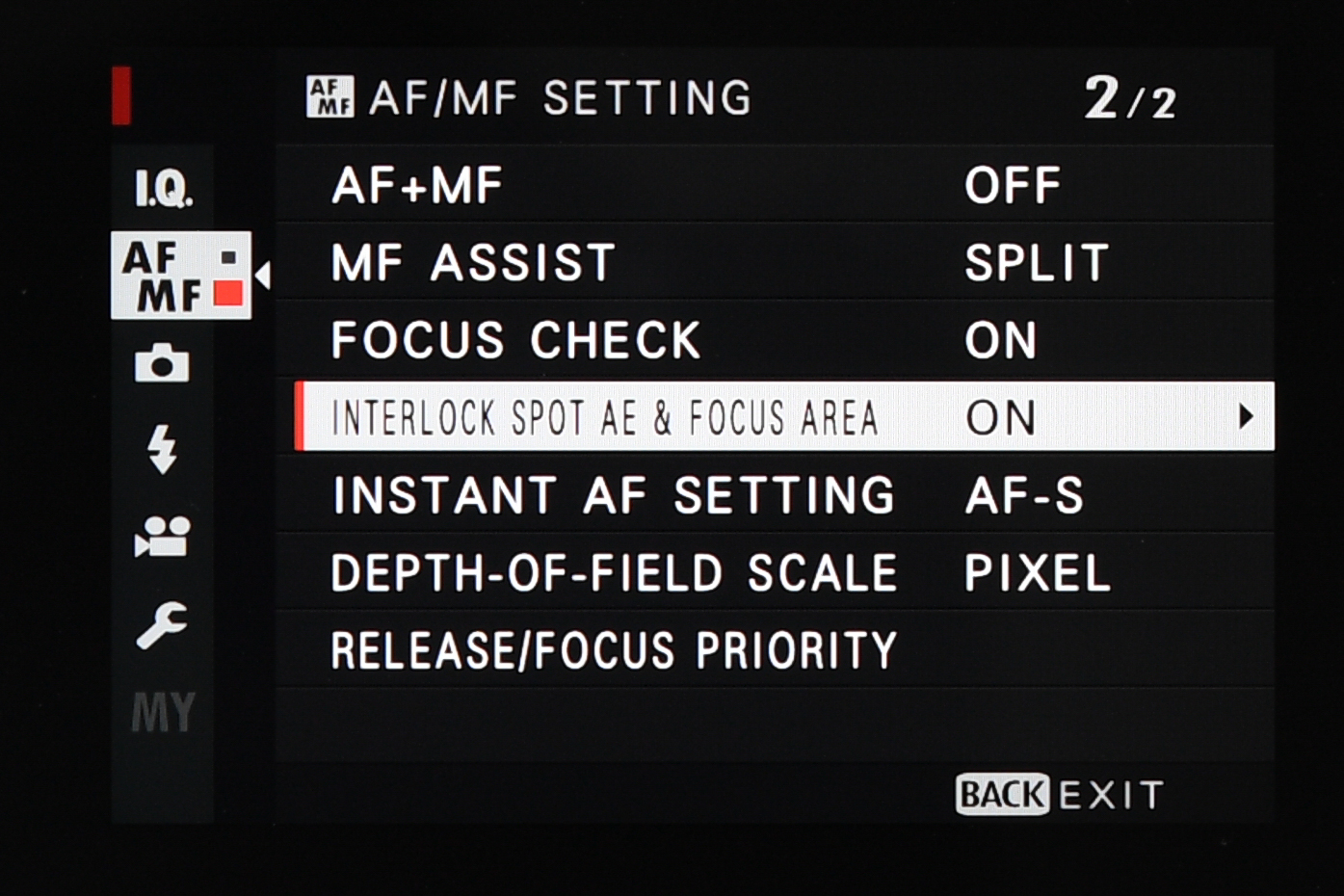
You can choose whether to spot meter at the selected focus point
The Interlock Spot AE & Focus Area option allows you to specify whether you want the camera to meter at the selected focus point when using spot metering.
You can also select how to assess depth of field using the Depth-of-Field Scale option. The Film Format Basis option is suggested for those who will be printing their images to moderate sizes. The Pixel Basis, meanwhile, is intended for those who may be examining their images at 100% on a computer display. As the permissible circle of confusion becomes smaller when images are analysed in this way, this option is designed to provide the finest control for utmost accuracy.
Finally, an AF Assist illuminator is once again located on the front plate, and this kicks into action whenever the camera lacks the illumination required for fast autofocus. It is, however, possible to disable this, which is useful when you need to be discreet.
From teenager to manager of the Canon side, it’s Mick Edwards featuring in the latest of our Fixation team blogs
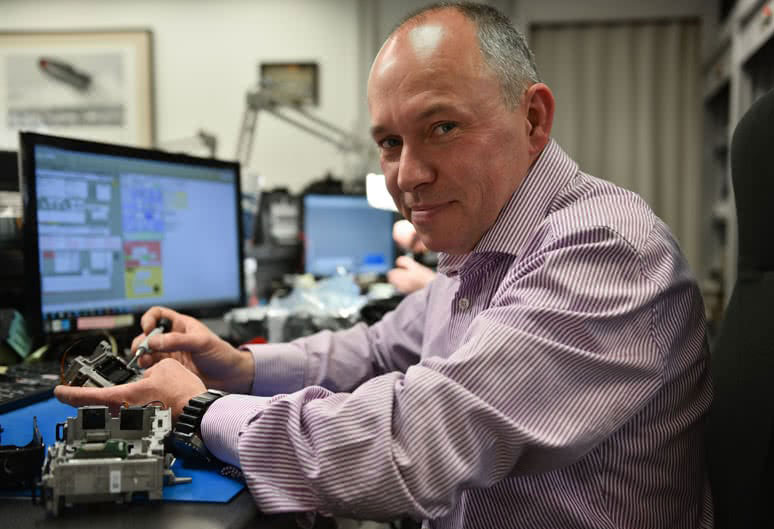
There can’t be many of Fixation’s long-term customers who wouldn’t recognise Mick Edwards. He’s been with the company from the beginning, assisting its founder, Mike Allen, to build it from a two-room operation to today’s repairs powerhouse.
These days Mick runs the Canon side of the workshop as Tech Manager, dividing his time between repairing kit and cracking (notoriously bad) jokes with long-suffering colleagues and customers who stop by. He tells us more about his history with Fixation…
In the beginning…..
‘Mike Allen and I met in 1982 when I was 18 and he started work at KJP shortly after I did. Previously he was Service Manager at Nikon and when I asked him what he was doing at KJP he said he’d come to build a workshop. So I said, “Give us a job!” And for better or worse he did!
‘We built a workshop out of practically nothing, working from August ’82 until Fixation’s proper opening in June 1988 and from there it developed into what it is today.
‘It’s been fun. I love it, absolutely love it. At first we only repaired Nikon products, but after 10 or so years we were approached by Canon who wanted us to offer the same service to their customers too. We were keen to help, so after sorting out details like the supply of spare parts, we were off and away!
‘From then I was doing Nikon, Kodak and Canon, but Canon just got bigger and bigger and needed managing properly, so I took on this role and have done it ever since.’
Fixation’s reputation
‘Relationships have always been important. In the beginning we had just two rooms and customers would come in and sit in the waiting room, which was just a sofa, and we used to repair their kit while they waited. When we were done they’d have the confidence to just pick it up and go do a job, or even fly around the world. The good reports started from there.’
His day-to-day role
‘I’m very much hands on – I love fixing things, it’s why I like the job.
‘The challenge is what we’re all after. You’re repairing the same products, but you want to do it to the best standard because you’re only as good as your last repair. We’re all the same and proud of what we do.’
Most memorable Fixation moments
‘As much as I love the day-to-day work, the different experiences are always exciting. Highlights include building depots at the London Olympics and Commonweath Games in Glasgow, but one of the most memorable was in 2007 when we worked with PA to set up cameras in the Royal Ballroom in Buckingham Palace.
‘PA provides images for all Royal Investitures in this room, but they can’t have a roaming photographer present. So we helped them set up a discrete camera and cabling so they can operate the camera remotely, shooting the ceremonies with the images transmitted directly to their picture desk.
‘There have also been some great customer stories. We’ve had cameras dropped in the sea then put in a bag of vodka. People think the alcohol will prevent corrosion, but it’s a waste of vodka if you ask me!’
Mick’s hobbies outside of work
‘I enjoy riding motorbikes, but would say my real passion is scuba-diving. I organise my own diving club and am an instructor too. I may be in control at work and when I’m diving, but at home I just do as I’m told by my wife and two boys!’
Louise Murray dons her diving gear to photograph the Atlantic bluefin tuna
The Friday morning before I leave for Andalusia to shoot Atlantic bluefin tuna, I’m making a routine test check of all my diving and underwater photography gear. A sticky button in the camera housing means that I cannot switch between stills and video. I call Fixation for an emergency assist and hastily make my way down for an urgent repair, before catching my flight later that day.
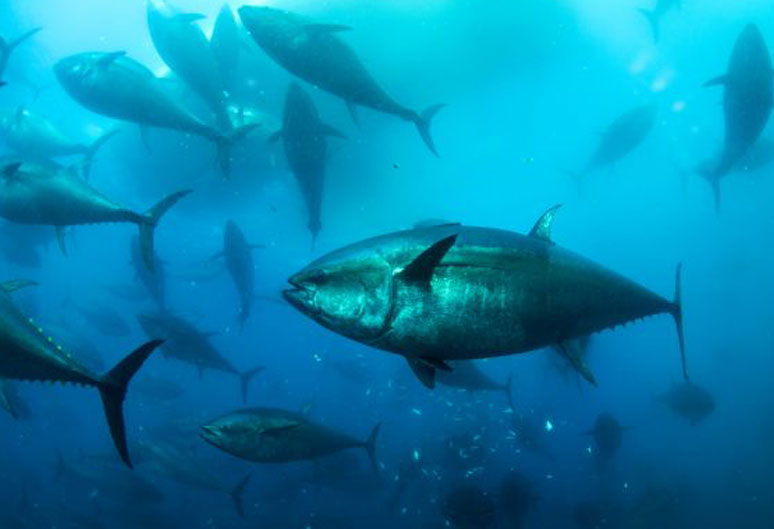
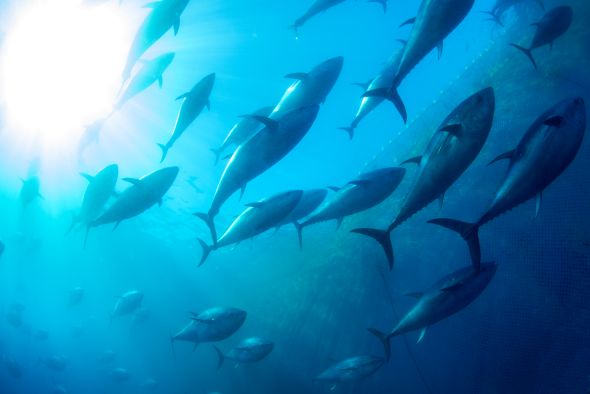
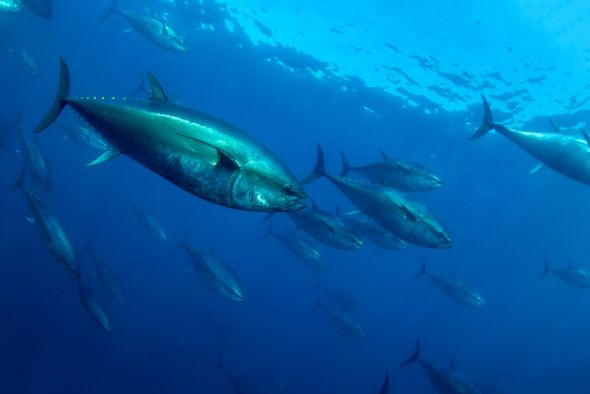
In Spain, it’s 32°C with a light breeze and I am just about to dive with 900 giant fish, each weighing between 150 and 200 kilos. Understandably I’m a bit nervous. I’ve been dressed in a black dry suit for over two hours and am struggling to stay cool. The boat is moored in a fattening pen about a mile offshore and we can see the huge fish swimming below the surface.
Here, fish captured in May are fattened up on a daily diet of defrosted sardines and mackerel before being sold to Japanese buyers in September. At least 10 tonnes of sardines have preceded me into the water today. This is not good. Fish scales are highly reflective and my underwater flash will bounce off them, a bit like using flash in a snowstorm!
For safety I have a dive buddy, Antonio. I’ve explained the nature of a fisheye lens and its 180-degree angle of view to him, so he is briefed to stay behind me unless I call him into a picture for scale. Antonio is there because although I am a certified commercial diver, these nets and others like them in fish farms worldwide are dangerous places to be. The powerful fish must swim constantly, and they do so in circles, meaning they create a vortex. The unwary can be sucked to the bottom of the net 30 metres down, or pushed against the outside of the swirling fish, where it’s easy to find dive gear or camera getting caught in the net. Alone, it’s quite possible to drown.
I’m here to complete a shoot of the tuna fishery for a German magazine – Unterwasser – producing an environmental piece about the state of the Atlantic tuna.
It has taken me since February, with the help of an excellent young translator called Polly, to negotiate diving with these magnificent fish. It’s now July. I’ve spent ages studying the tide tables and wind forecasts to find a small window when the sea surface will be calm, and visibility underwater acceptable. If you think topside shooting can be challenging, try working underwater. Imagine shooting in zero gravity you’ll get part of the picture, but then throw in wind, tides, currents and limited visibility – the variables are near-endless.
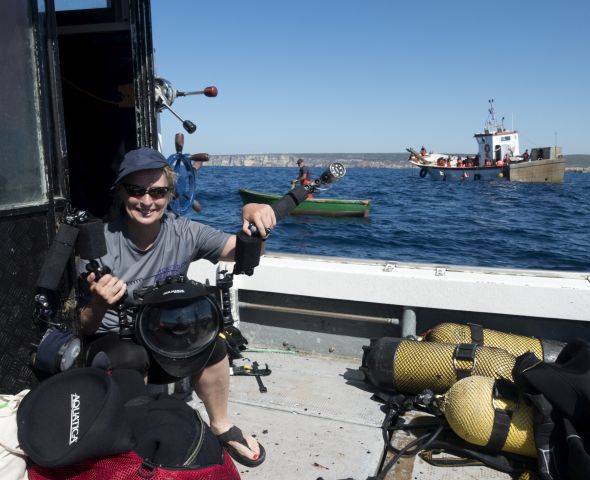
Fortunately I have excellent kit – an Aquatica housing for my Nikon D800 with a glass dome port which allows access to all of the camera’s controls while underwater, plus a couple of Inon flashes and a pair of Sola video lights.
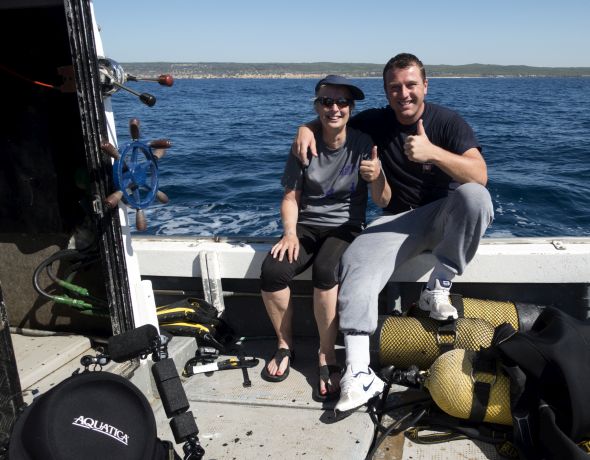
Louise Murray with Nikon D800 in Aquatica housing on board the tuna dive boat at Barbate, Spain
Back at the hotel I finish downloading and backing up, and yes, predictably the shots are murky, turbid and full of reflective fish scales. And worse there is a reflected Nikon logo in some images when shooting into sun. This at least is easily rectified by sticking a plaster over the logo on the D800 and blacking it out with a marker pen.
I’ve managed to explain to Sebastian the boss why it’s so important for me to start shooting before the sardines go into the pen. Tomorrow I will be diving with 900 large, fast and hungry fish. Time for a cold beer.
The next day we travel offshore in a rolling swell. You need a good sense of balance and a strong stomach for this kind of work. This time I get in before the sardines, and the tuna – known as the Maseratis of the sea – are truly motoring in a tight swirl of fishy power. Antonio is with me and I get the shots over the course of an hour in the water.
Louise Murray and dive buddy Antonio
The dead sardines start to rain down in the latter half of the shoot, so I decide to try and focus on a single sardine, secure in the knowledge that there shortly be a 150-200 kilo fish blasting out of the blue with the intent of dispatching it. I don’t get the money shot, as the acceleration of this top ocean predator is hard to predict, and with limited visibility I can’t see them coming fast out of the blue.
A few more dives and eventually I would have nailed it, but the weather stopped cooperating and with high winds forecast for the next five days, I had to leave – me, my cameras and all of my dive kit stinking strongly of sardines.
The images from this shoot will be published in Unterwasser magazine, either late this year or early next year. The bluefin tuna remains classified as an “endangered species” by the IUCN, its population having declined by as much as 90% in some areas due to overfishing. A video from this shoot was selected as a featured clip by the Science Photo Library, and can be seen here.
Louise Murray is an award-winning freelance journalist and photographer whose work has been published in the Guardian, the Times, and countless international magazines, books and popular science publication, and can be found at louisemurray.com
We use cookies on our website to give you the most relevant experience by remembering your preferences and repeat visits. By clicking “Accept”, you consent to the use of all the cookies.
This website uses cookies to improve your experience while you navigate through the website. Out of these cookies, the cookies that are categorized as necessary are stored on your browser as they are essential for the working of basic functionalities of the website. We also use third-party cookies that help us analyze and understand how you use this website. These cookies will be stored in your browser only with your consent. You also have the option to opt-out of these cookies. But opting out of some of these cookies may have an effect on your browsing experience. We log visitor IP addresses and cookie preferences for due diligence reporting.
Necessary cookies are absolutely essential for the website to function properly. These cookies ensure basic functionalities and security features of the website, anonymously.
Advertisement cookies are used to provide visitors with relevant ads and marketing campaigns. These cookies track visitors across websites and collect information to provide customized ads.
Performance cookies are used to understand and analyze the key performance indexes of the website which helps in delivering a better user experience for the visitors.
Analytical cookies are used to understand how visitors interact with the website. These cookies help provide information on metrics the number of visitors, bounce rate, traffic source, etc.
Functional cookies help to perform certain functionalities like sharing the content of the website on social media platforms, collect feedbacks, and other third-party features.